The new grand tour
The eighteenth-century grand tour was an education by road. Its modern revival is about the same thing — taking the long way, on purpose.
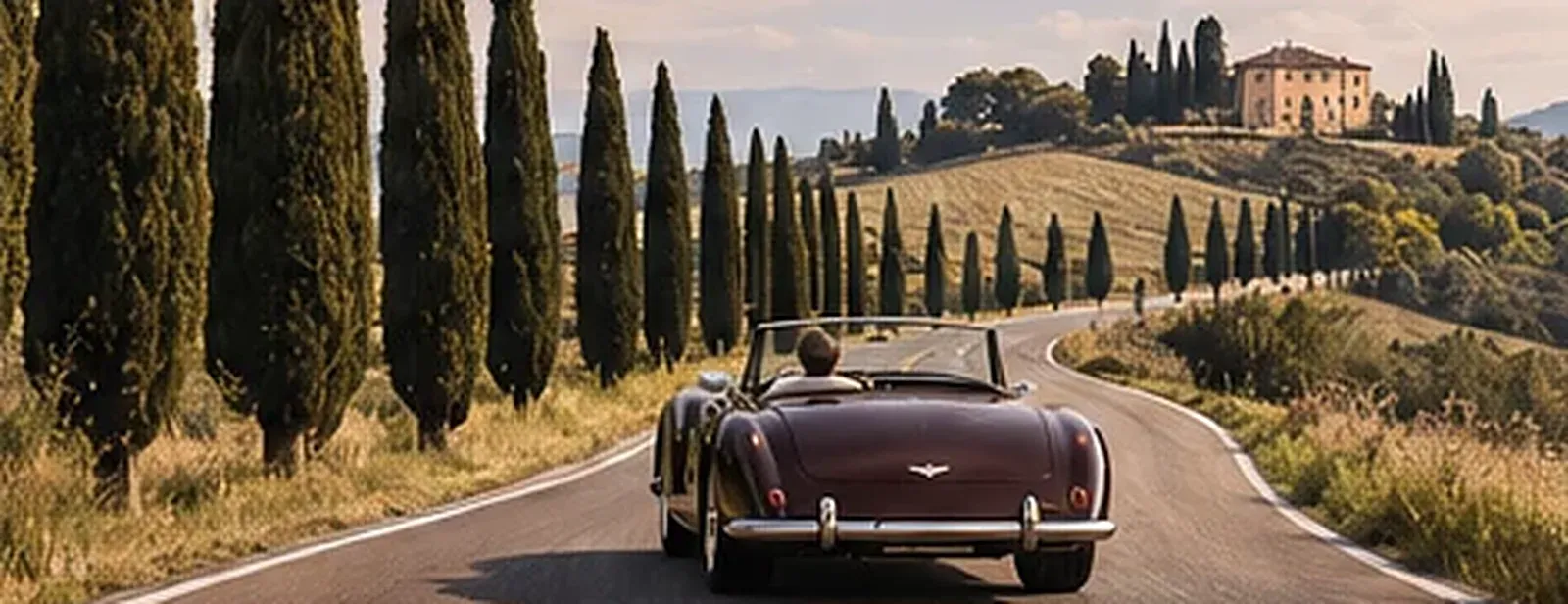
The original grand tour was a rite of passage: young travellers crossing Europe towards Italy to see its art and ruins in person. The journey was slow by necessity, and the slowness was the point.
The car as a room
A great touring car is less a machine than a room that moves. Its seats are made for hours, not laps; its luggage space matters as much as its power. The best of them make distance feel like a privilege rather than a chore.
Route over destination
Plan the roads before the hotels. Cypress avenues, mountain passes and coastal corniches reward an unhurried pace. Motorways are for getting home.
Plan the roads before the hotels. Motorways are for getting home.
Packing like a tourer
Soft luggage that fits the car’s shape. One good jacket. A paper map, because signal vanishes exactly when the scenery is best.
What we look for
Comfort that lasts a full day, a cabin that still feels special on the third, and a design that looks right parked outside a small hotel. The new grand tour isn’t about speed. It’s about arriving with something to say.