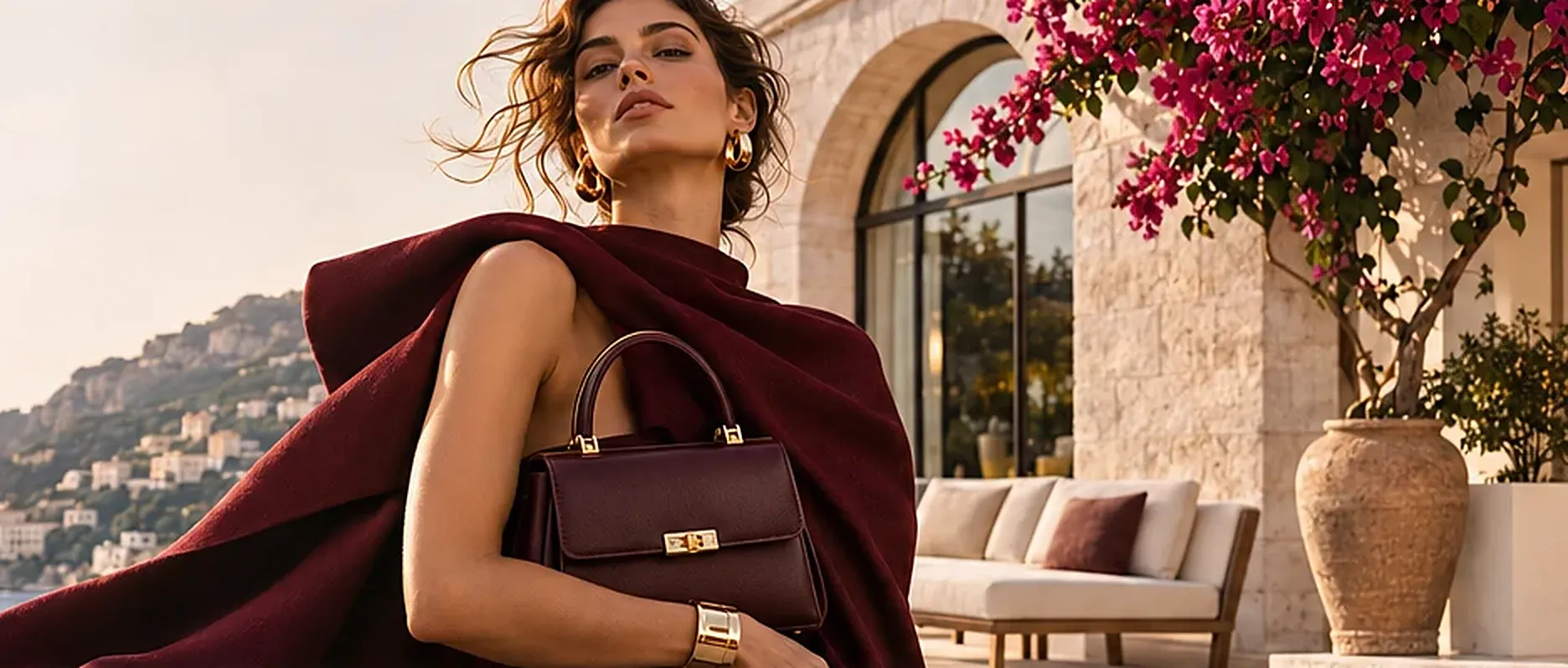
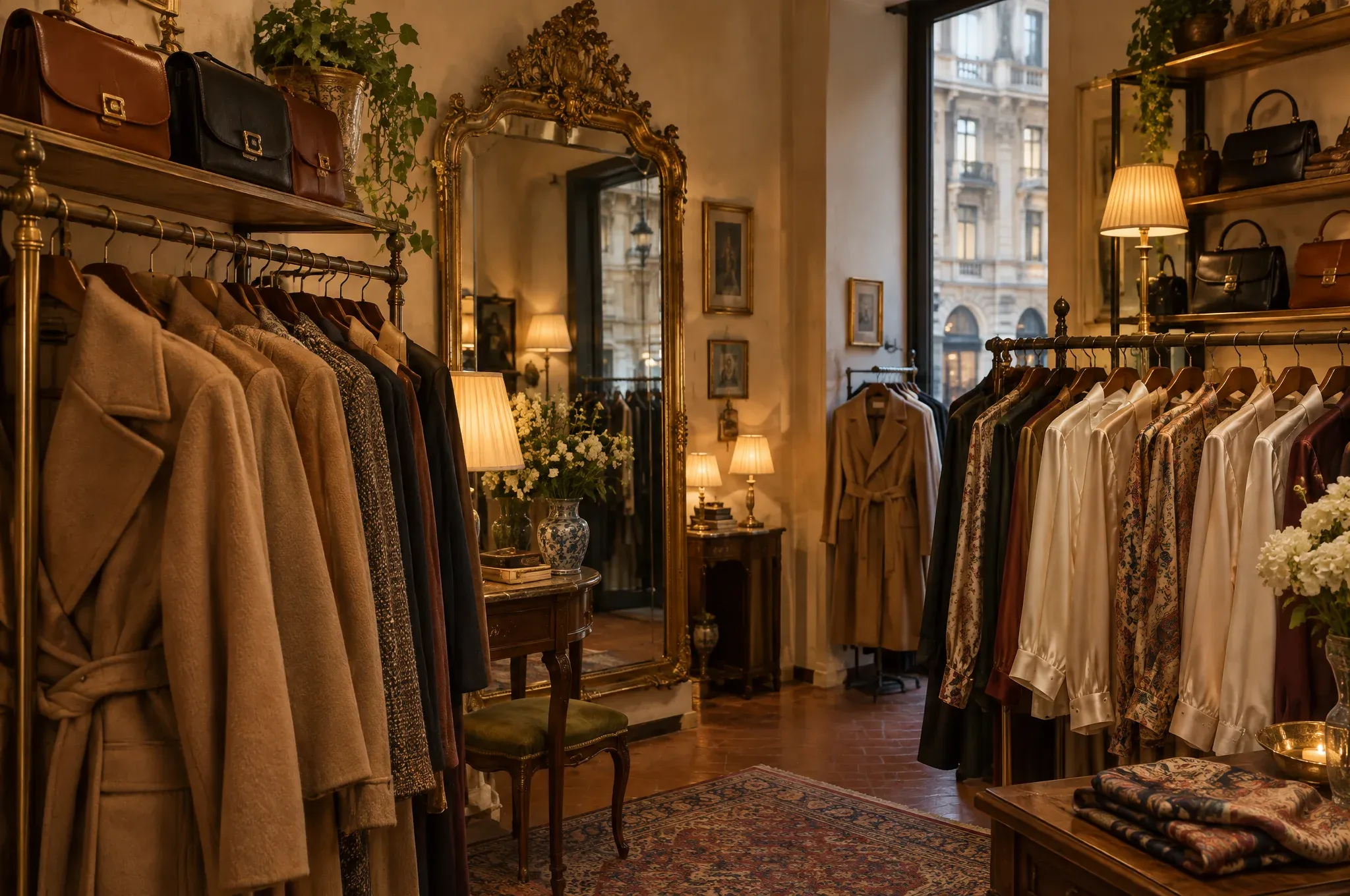
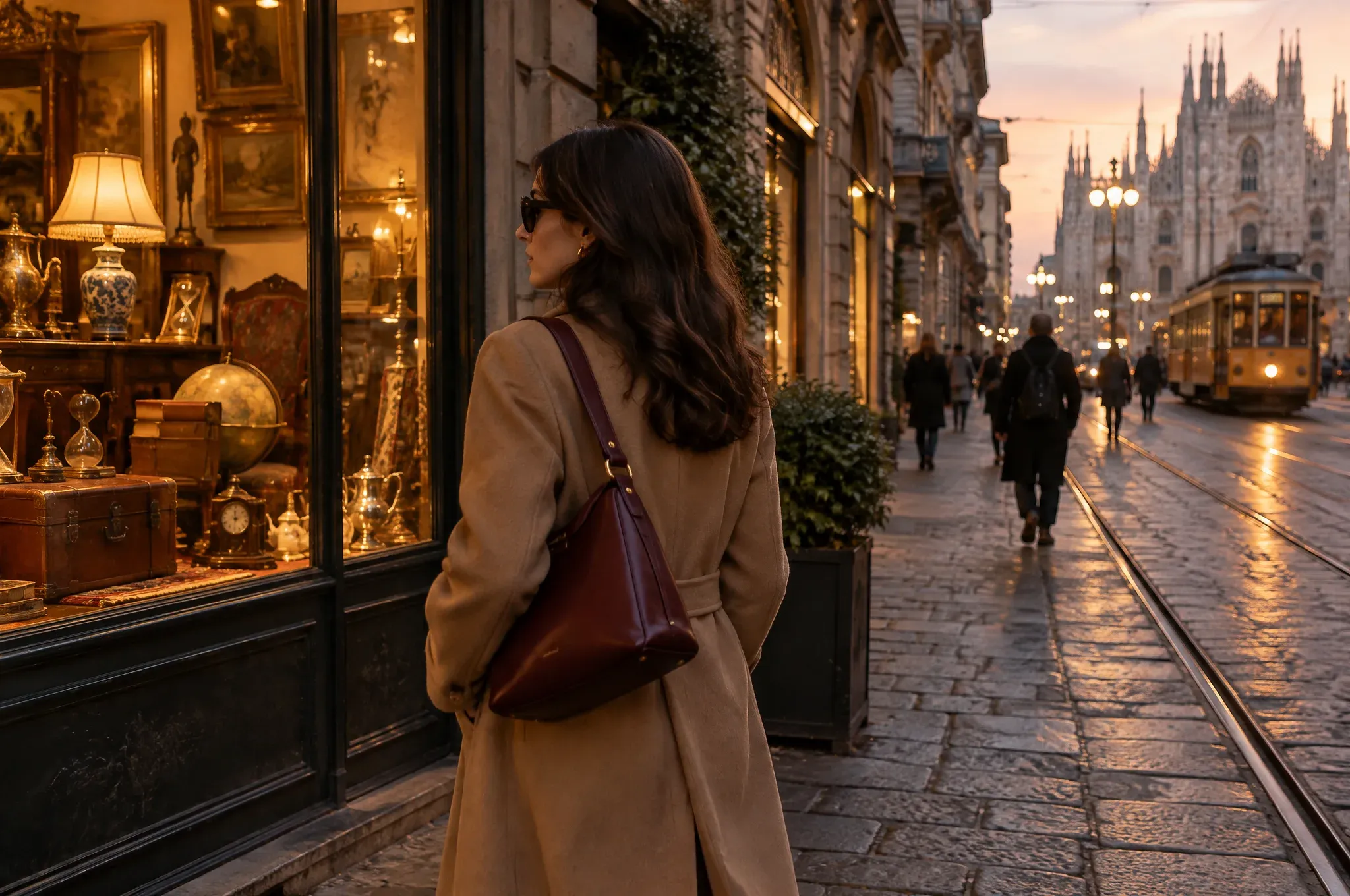
The weave that speaks for itself: reading a Bottega Veneta bag
Fifty years of intrecciato, a new creative director and a house that has never needed a logo. What makes the bags recognisable at twenty paces.
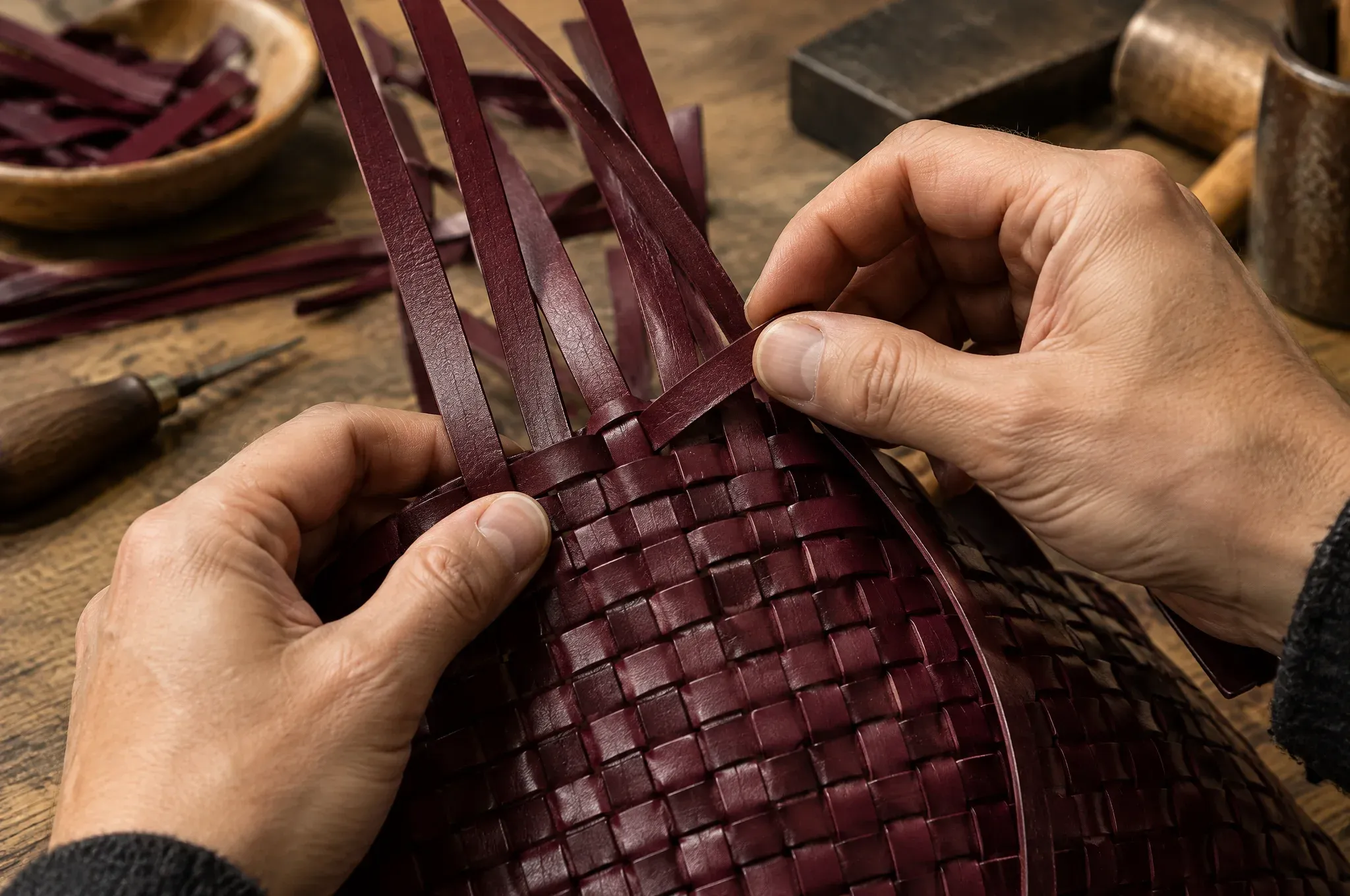
Some bags announce themselves with a monogram. A Bottega Veneta bag does it with a pattern of leather strips, woven by hand. That weave — the intrecciato — is the house’s signature, and the reason its bags are recognisable from across a room without a single letter on them.
Where it comes from
Bottega Veneta was founded in 1966 in Vicenza, in the Veneto, by Michele Taddei and Renzo Zengiaro. The intrecciato followed: FashionUnited dates its launch to 1975, and in 2025 the house marked fifty years of the weave. In 1980, an intrecciato clutch appeared on screen with Lauren Hutton in American Gigolo — an early proof that the bag could be famous without a logo.
How to read the weave
Look at the width of the strips and the regularity of the crossings. Good intrecciato is tight, even and flat, with edges finished so cleanly that the bag looks woven from a single surface. Turn it over: the quality should hold on the base and corners, where wear begins.
A Bottega Veneta bag announces itself with a pattern of leather, woven by hand — never with a monogram.
The recent shapes
Under Matthieu Blazy, the house introduced intrecciato-woven bags including the Kalimero (2022) and the Andiamo (2023), which quickly joined the classics. Blazy left for Chanel, and Louise Trotter, previously at Carven, took over as creative director at the end of January 2025. Her first collection for the house was shown at Milan Fashion Week in September 2025. FashionUnited notes she is currently the only female creative director at Kering.
Buying for the long term
Choose a colour you would wear as leather shoes — dark brown, black, a deep bordeaux — and a size you will actually carry. Intrecciato softens with use; a well-made bag looks better in its third year than its first.